There’s an old saying that fits this season perfectly: an ounce of prevention is worth a pound of cure. Nowhere is that more true than in your backyard once the weather turns. The biggest fall yard hazards for dogs don’t look dangerous at all. They look like acorns scattered under an oak, a cluster of mushrooms that popped up after a rainy night, and a front door that opens a lot more often than it did in July. Here’s what to watch for in each case, and what actually works to keep your dog safe through the season.
Acorns: Small, Crunchy, and Harder on Dogs Than You’d Think
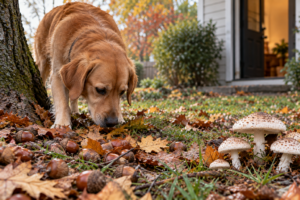
To a dog, an acorn is basically a snack that falls from the sky. To a vet, it’s a problem. Acorns and oak leaves contain tannins, which can irritate a dog’s stomach and, in larger amounts, stress the kidneys and liver. Even when the tannins don’t cause trouble, the acorn itself can. Swallowed whole, acorns are a classic cause of intestinal blockages in small and medium dogs, and a cracked acorn cap can chip a tooth.
Most dogs that eat one or two acorns end up with nothing worse than an upset stomach, maybe some vomiting or diarrhea. The dogs that get into real trouble are the grazers, the ones that treat the base of an oak tree like a buffet every time they go out. If your dog vomits repeatedly, strains without producing stool, seems bloated, or suddenly loses interest in food during acorn season, call your vet and mention the oaks in your yard.
Trainer’s Take: Teach “leave it” before the leaves fall, not after. Practice inside with low-value items, then move to the yard with a leash on. A dog that reliably leaves an acorn on cue is far easier to manage than one you have to chase down every October.
Backyard Fact: A single mature oak can drop 10,000 or more acorns in a heavy production year, called a mast year. If this fall feels worse than last fall, you’re probably not imagining it.
Raking helps, but you won’t get them all. If you have a heavy oak canopy, consider limiting your dog’s unsupervised access to that part of the yard until the drop is over, usually by late November in Southeastern Michigan.
Wild Mushrooms: The Overnight Guests You Didn’t Invite
Fall in our region is prime mushroom weather. Cool nights, damp soil, and a thick layer of decomposing leaves give fungi everything they need, and a lawn that was clear at bedtime can have a dozen mushrooms in it by morning.
Here’s the honest truth: most lawn mushrooms are harmless. The problem is that the dangerous ones, including several Amanita species found in Michigan, look unremarkable, and telling them apart takes real expertise. Amanita poisoning is especially nasty because dogs often seem to recover for a day or two before liver damage sets in. That’s why every veterinary toxicologist gives the same advice: treat every yard mushroom as toxic and remove it.
Trainer’s Take: Build a quick yard scan into your morning routine, especially after rain. Walk the areas your dog uses most before you let them out off leash. Ten seconds of scanning beats an emergency vet visit every time.
Backyard Fact: The mushroom you see is only the fruit. The actual fungus lives underground in the soil, so picking mushrooms doesn’t get rid of it. New ones can appear in the same spot for weeks, which is why the daily check matters more than any one cleanup.
Pull mushrooms wearing a glove or a plastic bag, and skip the temptation to toss them in an open compost pile. Moldy compost carries its own toxins for dogs, and a curious nose will find it. If you ever see your dog chewing a mushroom, take a photo of what’s left, grab a sample in a paper bag, and call your vet or the ASPCA Animal Poison Control Center right away. Identification is much faster when there’s something to identify.
“Door-Dashers”: Fall’s Sneakiest Hazard Isn’t in the Yard at All
Ask any hidden fence installer or shelter worker and they’ll tell you the same thing: escapes spike in the fall. The reasons stack up fast. The sun sets earlier, so more comings and goings happen in the dark. Halloween brings a parade of strangers to the door. Then the holidays arrive with deliveries, guests, and grocery runs, and suddenly your front door opens twenty times a day instead of five.
For a dog with any door-dashing instinct, every one of those openings is a lottery ticket. And a dog that bolts at 6 p.m. in November is bolting into full darkness, near roads where drivers can barely see them. This is the season when a bad habit becomes a genuine safety problem.
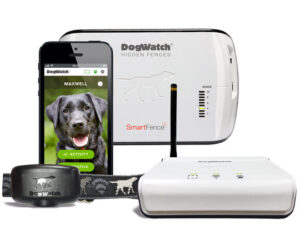
The fix has two parts. The first is management: leashes or gates during trick-or-treat hours, and a house rule that the dog is behind a barrier before the door opens for guests. The second is training your dog to respect a boundary even when the door is wide open. That’s exactly the kind of work DogWatch of Southeastern Michigan does for families from Brighton to Ann Arbor and across our service areas across Southeastern Michigan, pairing outdoor hidden fences with indoor pet boundaries so the open front door stops being an invitation. A dog that has learned where the line is doesn’t need you to win a footrace.
From the Install Team: Doorways and driveways are the two places we get asked about most in the fall. Indoor avoidance zones can teach a dog to hold back from the foyer entirely, so trick-or-treat night stops being a wrestling match at the door.
A Simple Fall Safety Routine
Put it together and fall safety takes about two minutes a day. Scan the yard for mushrooms each morning, especially after rain. Keep the area under oak trees raked, and supervise heavy chewers during peak acorn drop. Refresh your dog’s boundary training before the holiday rush, and decide now where the dog will be when the doorbell rings on October 31. Prevention really is cheaper than the cure, and in this case it’s easier too.
FAQs
What’s the best way to protect your dog from fall yard hazards?
The best protection against fall yard hazards for dogs is a layered routine: a quick daily yard scan for mushrooms, raking under oak trees during acorn drop, and a trained boundary your dog respects at the door and the property line. No single step covers everything, but together they close off the three most common ways dogs get hurt in autumn.
Do hidden fences still work once leaves and snow cover the yard?
Yes. The boundary wire sits underground and the signal passes through leaves, snow, and frozen soil without any change in performance. Your dog also isn’t relying on seeing anything. The training flags come down early in the process, and dogs learn the boundary by feel and by location, which is why the fence keeps working in December just like it did in July. Learn more about how a hidden dog fence works.